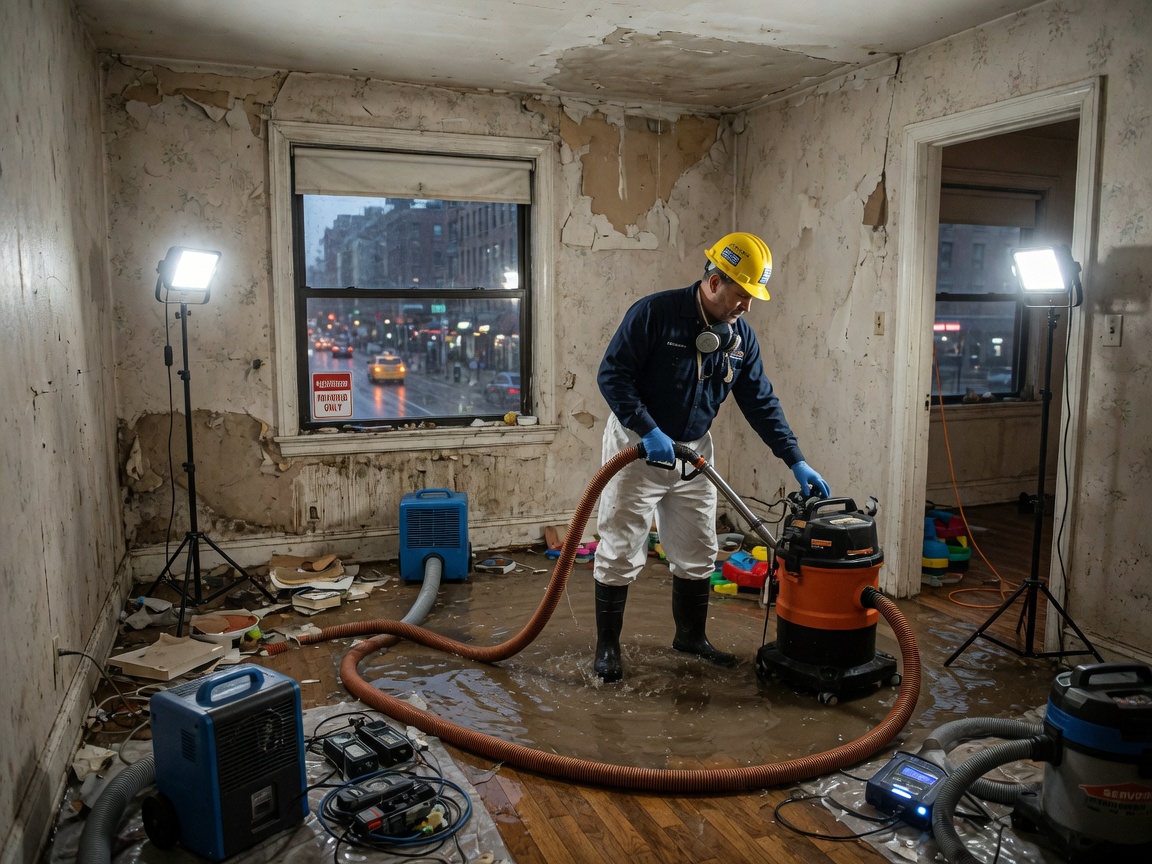
New York Water Damage Restoration handles water damage restoration jobs throughout Weehawken, focusing on older row houses and multi-family buildings that line streets like Park Avenue and Hudson Avenue. These tightly packed homes often share walls and have basements that sit close to the water table, so leaks from upstairs units or roof failures spread fast. Our crews based at 4904 Avenue L, Brooklyn, NY 11234 travel via the Lincoln Tunnel or ferry routes to reach jobs quickly during humid summers or after winter pipe bursts.
Weehawken sits directly across from Manhattan with steep slopes that direct stormwater toward the Hudson River. This terrain, combined with cold winters that freeze older plumbing, creates repeat water intrusion in cellars and crawl spaces. We arrive during posted hours, Mon–Fri 8am–6pm and Sat 9am–2pm, to extract water, dry structures, and prevent mold in these dense neighborhoods before it affects adjacent properties.
Access to many Weehawken addresses requires navigating narrow side streets and limited parking near the waterfront. Our team stages equipment efficiently so we can start drying within hours of the first call, protecting the wood framing and plaster common in pre-war stock along Boulevard East.
Around Weehawken
We regularly work near:
- 📍Weehawken Waterfront Park
- 📍Lincoln Tunnel
- 📍Weehawken High School
- 📍Bergenline Avenue
- 📍Hudson Avenue
Water Damage Restoration in Weehawken — Local Notes
- •Weehawken row houses built before 1940 often have shared foundation walls that let water migrate between units, requiring coordinated drying on both sides of the wall.
- •Steep grades along the Palisades send runoff toward lower streets like Shipyard Lane, so extraction pumps and perimeter barriers are set first to stop further intrusion from the Hudson.
- •Winter freezes along exposed pipes under unheated porches and entryways cause most cold-weather calls; thawing and drying must happen before interior finishes are disturbed.
- •Limited curb space near Bergenline Avenue means equipment is staged in driveways or alleys to avoid blocking emergency access during active leaks.