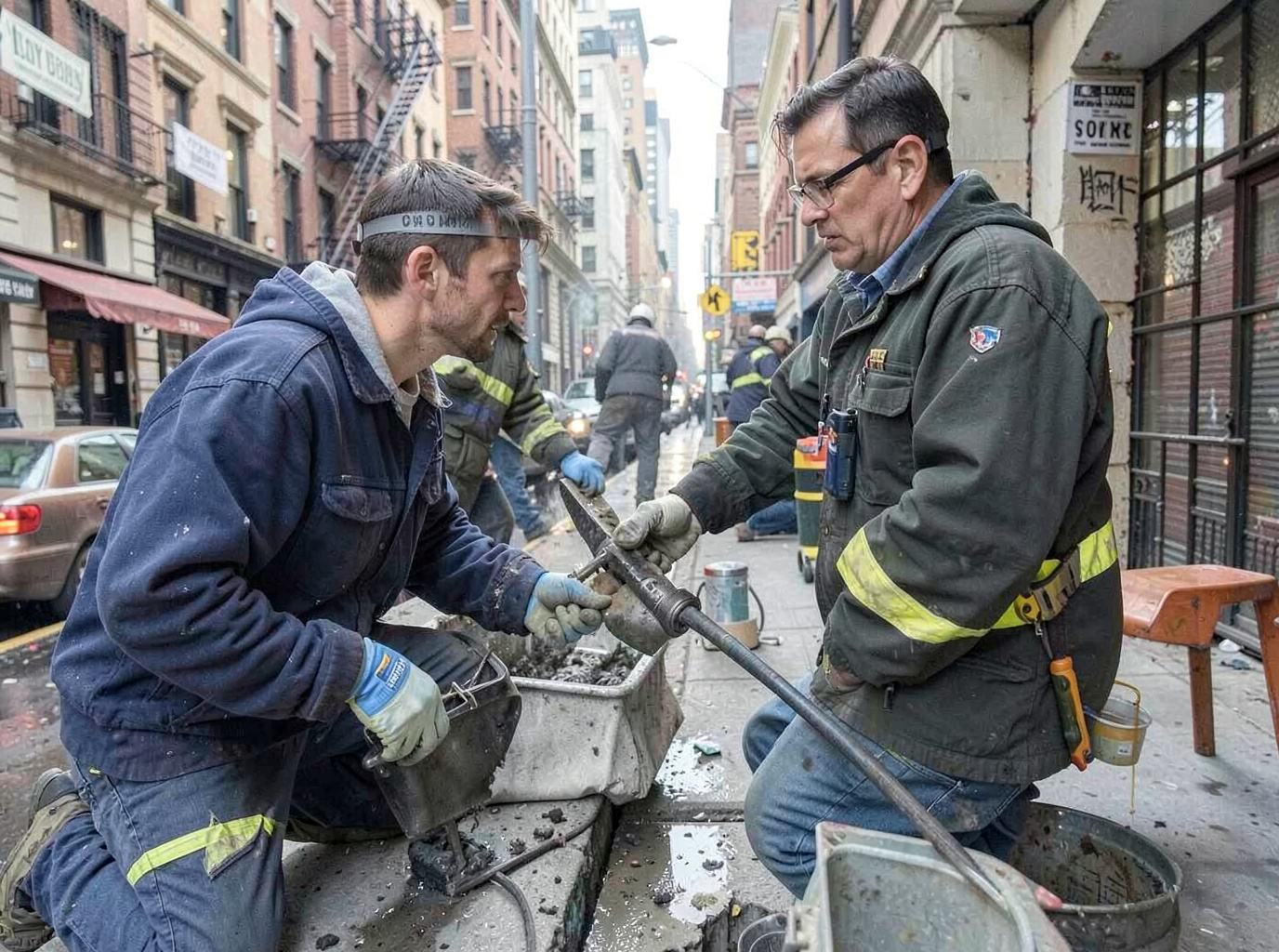
New York County buildings from the early 1900s often have cast-iron pipes and plaster-over-lath walls that hold moisture long after the visible leak stops. In Manhattan and the Upper East Side, a single burst riser on the fourth floor can travel down multiple units because the floor joists run continuously across apartments. Our crews start by isolating the zone with moisture meters before any demolition so we do not open walls that are still dry.
Humid subtropical summers keep relative humidity above 70 percent for weeks, so extracted rooms need dehumidification rated for at least 150 pints per day or mold sets in behind baseboards within 48 hours. Winters bring the opposite problem: cold air infiltration through single-pane windows near Central Park freezes standing water in crawl spaces and turns minor seepage into ice expansion cracks in the foundation. We schedule extra drying time and use low-temperature equipment when outdoor temps drop below freezing.
Brooklyn basements near Avenue L sit on fill soil that retains water after nor'easters, so we always check the exterior grade before finishing interior repairs. Times Square and Empire State Building area commercial spaces add another layer: tenant improvements often hide shut-off valves behind built-ins, so locating the main requires coordination with the building super before we can stop the flow.
Technician insight
In New York the thing that catches most people out with water damage repair is how quickly moisture travels horizontally through the continuous floor joists in 1920s buildings near the Upper East Side and Central Park; you can dry the obvious spot and still find wet plaster two apartments away if you skip thermal imaging.
Upper East Side apartment leak
A fourth-floor riser froze and split during a January cold snap, sending water into three stacked units. We mapped moisture through the plaster, extracted from the lowest unit first, then ran drying equipment for six days until joists tested dry. New sections of lath and plaster were installed to match the original finish and the building super approved the work before we left.
Water Damage Repair Services We Offer
✓Emergency Water Extraction
Rapid removal of standing water from basements and first-floor units in pre-war Manhattan buildings using truck-mounted pumps sized for tight elevator access.
✓Structural Drying
Forced-air drying and dehumidification of plaster walls and hardwood floors common in Upper East Side brownstones to prevent warping and hidden mold.
✓Pipe Burst Wall Repair
Targeted removal and replacement of water-damaged lath and plaster after frozen pipe failures during cold New York County winters.
✓Subfloor Water Damage Restoration
Inspection and replacement of tongue-and-groove subfloors soaked by leaks from apartments above in multi-unit Brooklyn and Bronx buildings.
✓Basement Seepage Repair
Interior drainage and vapor barrier installation for properties near Central Park and Brooklyn fill-soil zones where groundwater pressure rises after heavy rain.
Water Damage Repair Cost in New York, NY
| Service | Typical Range | What Affects It |
|---|---|---|
| Single-room water extraction and drying | $650–$1,400 | Higher when multiple floors or plaster walls are involved |
| Pipe burst wall and ceiling repair | $1,200–$2,800 | Depends on linear feet of wall opened and finish level |
| Basement seepage mitigation | $900–$2,100 | Includes drainage trench and vapor barrier; exterior grading adds cost |
| Subfloor replacement after leak | $800–$1,900 | Varies with hardwood versus carpet finish and square footage |
Ranges are typical for New York, NY and confirmed with an exact written quote before any work starts.
How it works
- 1
On-Site Assessment
We arrive with moisture meters and thermal cameras to map every wet assembly without guessing, then photograph all affected areas for insurance documentation.
- 2
Water Removal
Pumps and extractors pull standing water while we protect salvageable contents and route hoses through service entrances common in pre-war buildings.
- 3
Drying and Monitoring
Daily moisture readings guide equipment placement until drywall and subfloors reach manufacturer dry standards for the Northeast climate.
- 4
Restoration and Finish
We replace damaged materials with like-kind products and coordinate with building management on any required permits for work in landmarked districts.
Pricing
Most water damage repair jobs in New York County fall into the ranges below; final cost depends on square footage affected, number of affected floors, and whether contents must be moved.