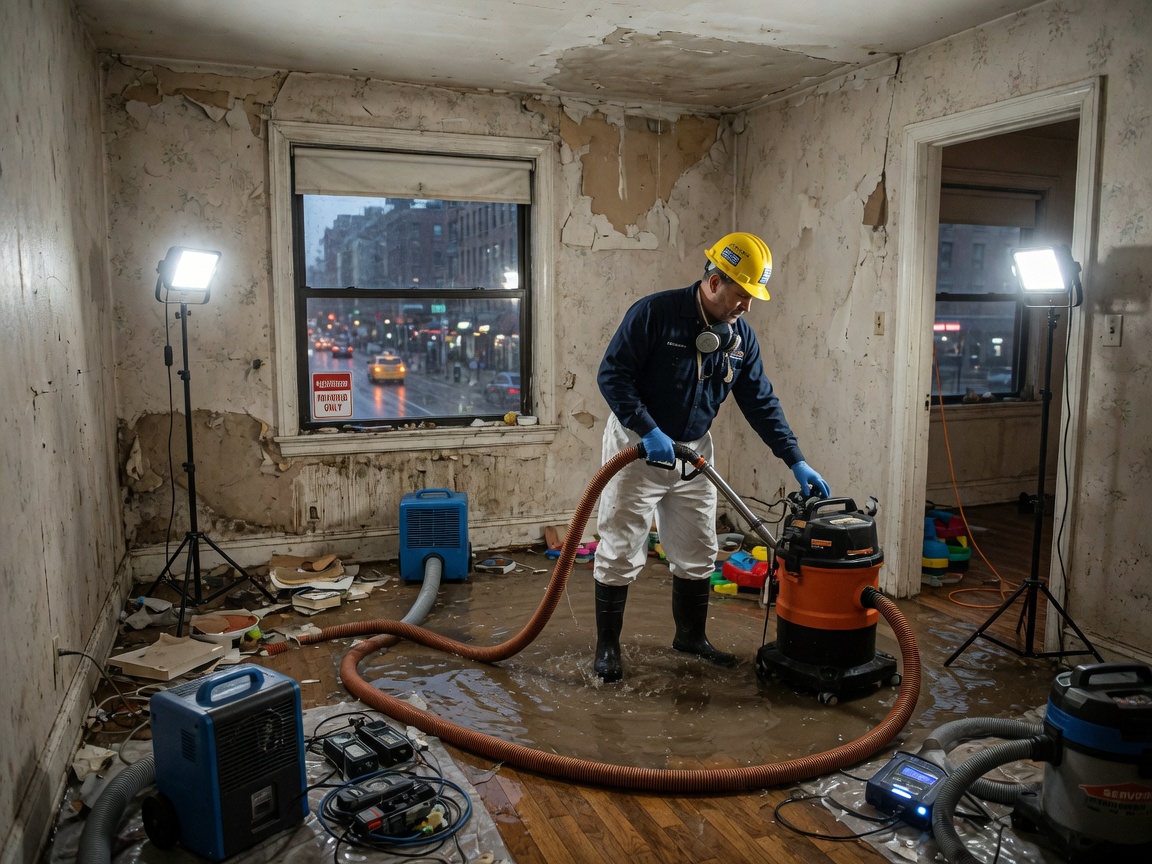
New York County properties, especially pre-war apartments in the Upper East Side and Manhattan, often feature plaster walls and outdated plumbing that trap moisture after leaks. Hot humid summers accelerate mold growth in these tight spaces while cold winters cause pipe bursts near Central Park and Times Square high-rises. Our team extracts standing water quickly then uses targeted drying to protect original wood floors and avoid structural rot common in Brooklyn brownstones.
Serving clients from our Brooklyn location at 4904 Avenue L allows rapid response across the East River to Bronx and Manhattan jobs. We address edge cases like water migrating through shared walls in co-op buildings or affecting subway-adjacent basements where soil saturation stays high. Proper documentation of hidden moisture prevents insurance disputes that frequently arise with older New York County stock.
Winter freezes in Upper East Side units demand careful thawing and insulation checks before full restoration begins. Summer humidity requires dehumidification rates higher than suburban jobs to stop secondary damage in Empire State Building area commercial spaces. Every project includes moisture mapping and material-specific drying plans tailored to the building age and neighborhood conditions.
Technician insight
In New York, the thing that catches most people out with water damage restoration is how quickly moisture travels through plaster and shared walls in pre-war Upper East Side buildings during humid summers; a small leak on one floor can saturate three units below before anyone notices.
Upper East Side Apartment Pipe Burst
A frozen pipe in a 1920s Manhattan building near Central Park leaked overnight into two units below. We extracted water from hardwood floors and opened affected plaster walls, then ran drying equipment for five days to prevent mold in the humid summer air. The units were returned to use without further demolition.
Water Damage Restoration Service Services We Offer
✓Emergency Water Extraction
Rapid removal of standing water from Manhattan apartments and Brooklyn basements to limit spread into shared walls and floors.
✓Structural Drying
Targeted drying of plaster, lath, and hardwood in Upper East Side pre-war buildings using equipment sized for tight urban layouts.
✓Pipe Burst Restoration
Repair and drying after winter freezes common in New York County older plumbing near Central Park and Times Square.
✓Basement Water Cleanup
Handling groundwater intrusion in Bronx and Brooklyn row houses where high water tables meet aging foundations.
✓Mold Prevention After Flooding
Humidity control and material removal in humid subtropical summers to stop mold in Manhattan and Upper East Side units.
Water Damage Restoration Service Cost in New York, NY
| Service | Typical Range | What Affects It |
|---|---|---|
| Emergency extraction visit | $450–$900 | Higher in Manhattan high-rises with limited parking and elevator access |
| Full structural drying | $1,200–$3,500 | Varies by square footage and whether plaster walls require opening |
| Pipe burst cleanup | $800–$2,200 | Increases with winter timing and shared wall involvement in Upper East Side buildings |
| Basement water removal | $600–$1,800 | Depends on groundwater volume typical after heavy summer rains in Brooklyn and Bronx |
Ranges are typical for New York, NY and confirmed with an exact written quote before any work starts.
How it works
- 1
On-Site Assessment
Inspect affected areas in Manhattan or Upper East Side properties, document moisture levels, and identify hidden water paths in older construction.
- 2
Water Extraction
Remove standing water using pumps suited for multi-story buildings and shared utility spaces common in New York County.
- 3
Drying and Dehumidification
Deploy air movers and dehumidifiers calibrated for humid summers or winter cold to protect original materials.
- 4
Restoration and Repairs
Replace damaged drywall, flooring, and insulation while coordinating with building management in co-ops and brownstones.
- 5
Final Verification
Confirm moisture readings meet standards before returning the space to normal use.
Pricing
Upfront quotes after inspection; final cost depends on water volume, building access, and materials affected.