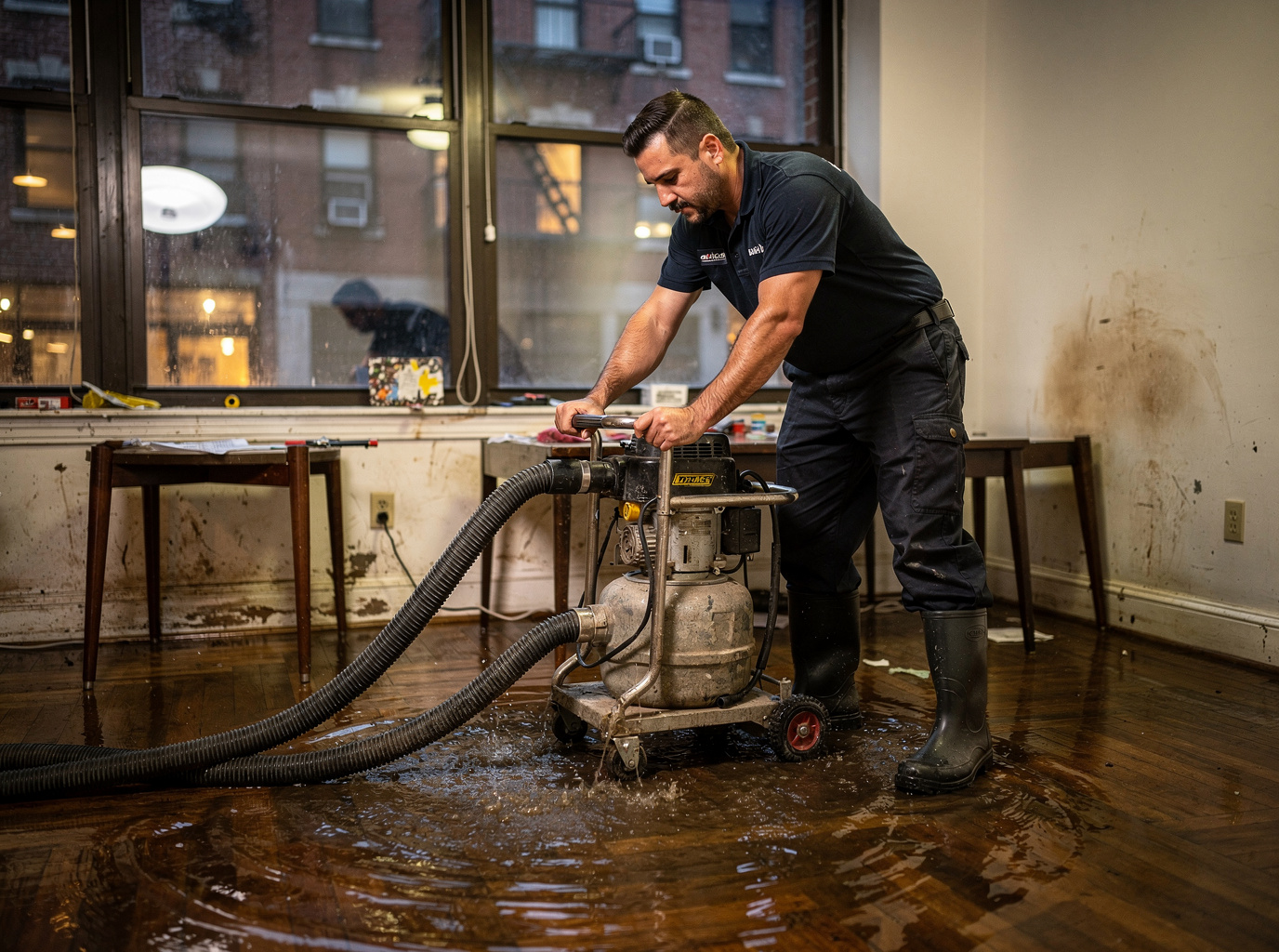
New York Water Damage Restoration responds to calls from Kearny homes and businesses from our base at 4904 Avenue L in Brooklyn. Crews cross into Hudson County to handle leaks, burst pipes, and storm flooding in the neighborhood's older row houses and multi-family buildings along Bergen Avenue and Schuyler Avenue. We arrive during posted hours Monday through Friday 8am to 6pm or Saturday 9am to 2pm to stop water spread before it reaches finished basements common in the area.
Kearny sits beside the Passaic River where high water tables and heavy summer rains push moisture into foundations. Cold winter snaps freeze supply lines in pre-war housing stock, creating sudden interior damage. Our teams extract standing water, set drying equipment, and check for hidden moisture in tight lot layouts where neighboring structures limit side access. This keeps jobs moving without unnecessary demolition in dense blocks around Kearny High School.
We focus on the real conditions that affect restoration here: humid summers that speed mold growth after leaks and narrow driveways that require smaller equipment to reach rear yards. Every job starts with an on-site inspection so homeowners see exactly what needs removal and drying before any work begins.
Around Kearny
We regularly work near:
- 📍West Hudson Park
- 📍Kearny High School
- 📍Arlington Memorial Park
- 📍Kearny Avenue
- 📍Bergen Avenue
- 📍Passaic River waterfront
Water Damage Restoration in Kearny — Local Notes
- •Row homes built before 1950 along Kearny Avenue and the Passaic River often have shared foundations that let water travel between properties during heavy rain.
- •Humid subtropical summers here turn small ceiling leaks into widespread mold within days inside the tight, multi-story buildings typical of the neighborhood.
- •Winter pipe bursts are common in uninsulated basements near West Hudson Park because cold air settles in the low-lying blocks close to the river.
- •Limited rear-yard access on many lots forces crews to carry equipment through front doors or narrow alleys rather than driving trucks directly to the affected area.