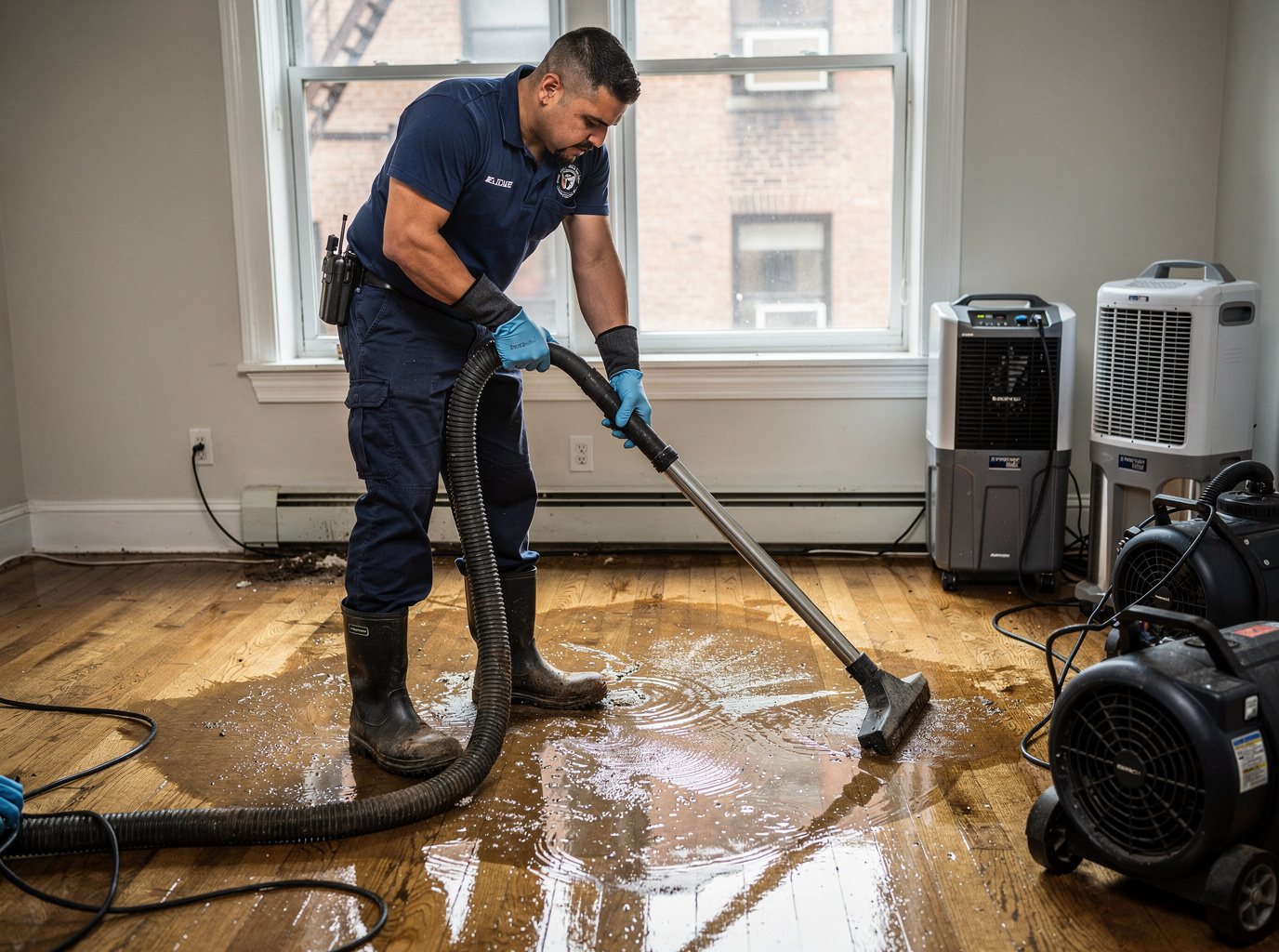
Hackensack properties along the river and in older blocks near Main Street face repeated water intrusion from aging sewer lines and high water tables. Our crews based at 4904 Avenue L in Brooklyn cross the bridge to reach these homes quickly, using portable extractors that fit narrow driveways and row-house lots common throughout the city.
Winter freezes followed by rapid thaws crack pipes in pre-1940 brick homes that line Essex Street and nearby side streets. We focus on targeted drying behind plaster walls and under narrow basements where moisture lingers because of the clay soil and limited airflow typical in this section of Bergen County.
Summer humidity accelerates mold growth after storms that drop heavy rain into low-lying yards near Johnson Park. Restoration work here includes removing saturated insulation from tight crawl spaces and running dehumidifiers sized for the smaller square footage found in Hackensack two-family homes.
Around Hackensack
We regularly work near:
- 📍Bergen County Courthouse
- 📍Hackensack River
- 📍Johnson Park
- 📍Hackensack Public Library
- 📍Essex Street
Water Damage Restoration in Hackensack — Local Notes
- •Many Hackensack homes built before 1950 sit on narrow lots with shared walls, so equipment must be carried through front doors rather than side yards.
- •Clay-heavy soil and the nearby Hackensack River cause slow drainage after heavy rain, extending drying times in basements along River Street.
- •Older knob-and-tube wiring in Upper Main Street properties requires extra care when placing drying fans to avoid electrical hazards.
- •Cold snaps in winter frequently burst pipes in unheated crawl spaces under homes east of the courthouse, sending water into finished lower levels.