2026-10-31 · Anthony Russo
What Affects Water Damage Restoration Costs in New York City
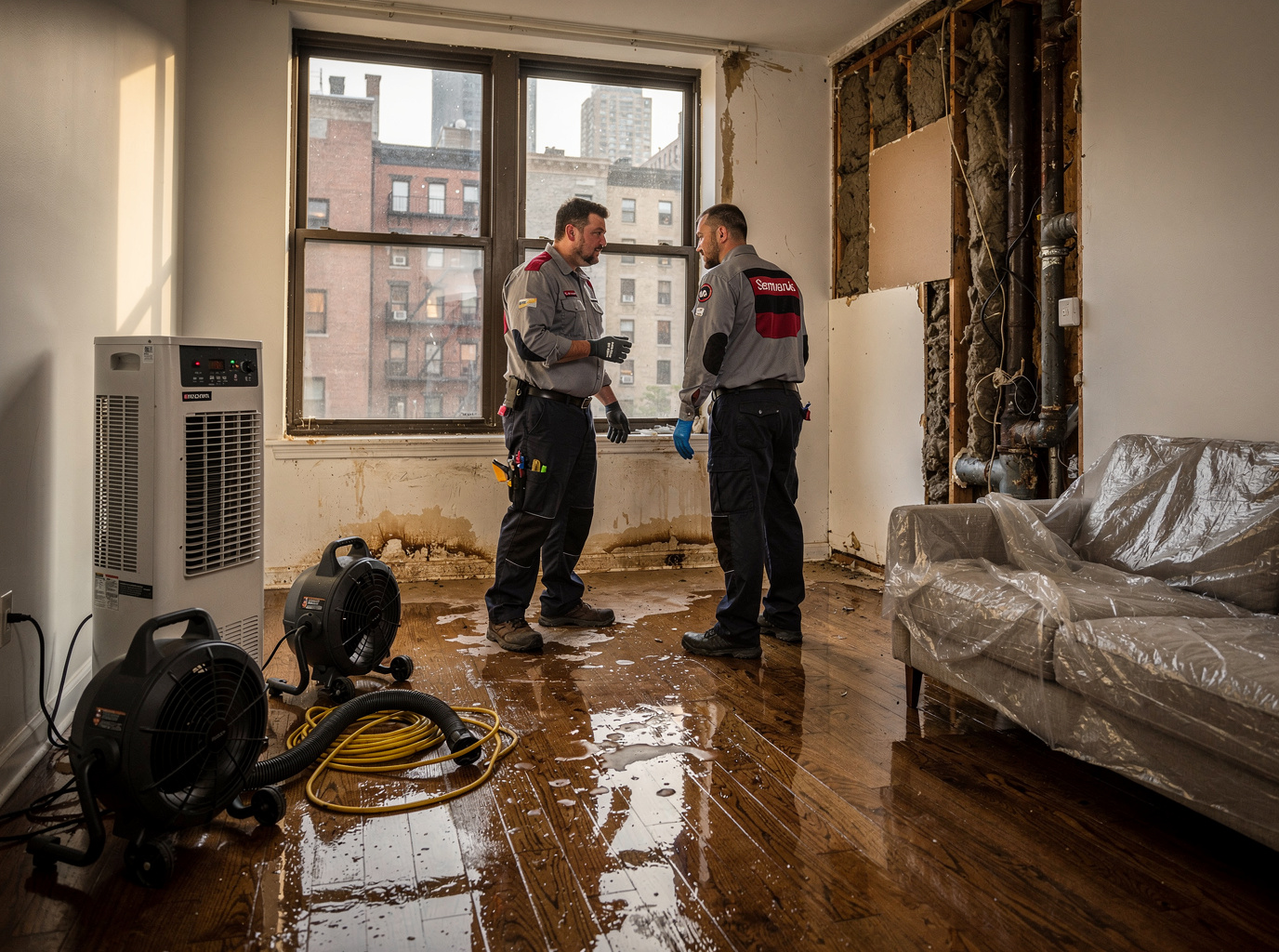
Water damage restoration costs in New York City typically range from $1,200 for contained leaks to $9,000-plus for widespread flooding in older multi-unit buildings, shaped most by damage extent, property construction era, and exposure to winter freezes or nor'easter rains. These variables interact directly with the dense pre-war housing stock found throughout Manhattan and the Upper East Side, where narrow access points and shared walls raise labor time. New York County properties often sit on clay-heavy soils that retain moisture longer after heavy rain, extending drying periods compared to inland spots. Crews must also navigate tight elevator schedules in high-rises near the Empire State Building or Times Square, adding coordination costs absent in suburban settings.
Building Age and Construction Materials
Pre-war apartments and brownstones common in the Upper East Side and Manhattan feature plaster-over-lath walls and cast-iron piping that corrode after decades of use, turning small leaks into hidden damage behind multiple layers. Restoration teams spend extra hours removing and replacing these materials while preserving original trim, which increases both material and labor expenses. In contrast, post-1980 buildings in Brooklyn often use drywall and PVC, allowing faster cuts and simpler repairs. The age of New York County infrastructure also means many structures lack modern vapor barriers, so moisture travels farther into subfloors and requires longer dehumidification runs. Owners of 1920s buildings near Central Park routinely face higher invoices because crews must test for asbestos in older insulation before cutting, a step skipped in newer Bronx developments.
Seasonal Weather and Climate Effects
New York’s humid subtropical climate brings cold winters that freeze supply lines in unheated Upper East Side apartments, creating sudden bursts that soak multiple floors at once. These events drive up costs through emergency after-hours mobilization and the need for temporary heat during drying. Hot, humid summers accelerate mold growth once water sits for more than 48 hours, requiring additional antimicrobial treatments not always needed in drier climates. Nor’easters push coastal flooding into Brooklyn basements and low-lying Bronx streets, saturating soil that then wicks moisture back into foundation walls for weeks. Crews working these jobs budget extra time for repeated moisture readings because the region’s high groundwater table keeps relative humidity elevated even after extraction equipment runs.
Damage Scope and Access Challenges
The physical size of affected areas directly multiplies equipment and labor line items, especially when water travels through shared ceilings in Manhattan co-ops near Times Square. A single-unit kitchen leak may stay under $2,000, yet the same volume spreading to two neighboring apartments can triple that figure due to coordination with multiple owners. Tight alleyways and limited street parking around the Empire State Building force crews to hand-carry pumps and fans up several flights, extending job duration. Properties in Brooklyn near the water table also contend with recurring seepage after heavy rain, prompting repeated visits that compound total expense. Readers facing pipe bursts can review handling burst pipes after winter freezes in New York apartments for targeted prevention steps.
How Restoration Methods Influence Final Pricing
Technicians choose between targeted drying and full gut renovation based on material saturation levels, directly affecting whether a job stays in the lower or upper cost range. In humid New York summers, high-velocity air movers and commercial dehumidifiers must run longer in sealed pre-war units with single-pane windows, raising utility and equipment rental fees. When water reaches structural joists in older New York County row houses, crews may need to open floors from below, a step that adds demolition and reconstruction charges. Property owners comparing options often start with water damage restoration or water damage repair services that outline these method choices before work begins. Additional guidance on post-storm recovery appears in drying out basements after nor’easter flooding in NYC.