2026-10-31 · Anthony Russo
Handling Burst Pipes After Winter Freezes in New York Apartments
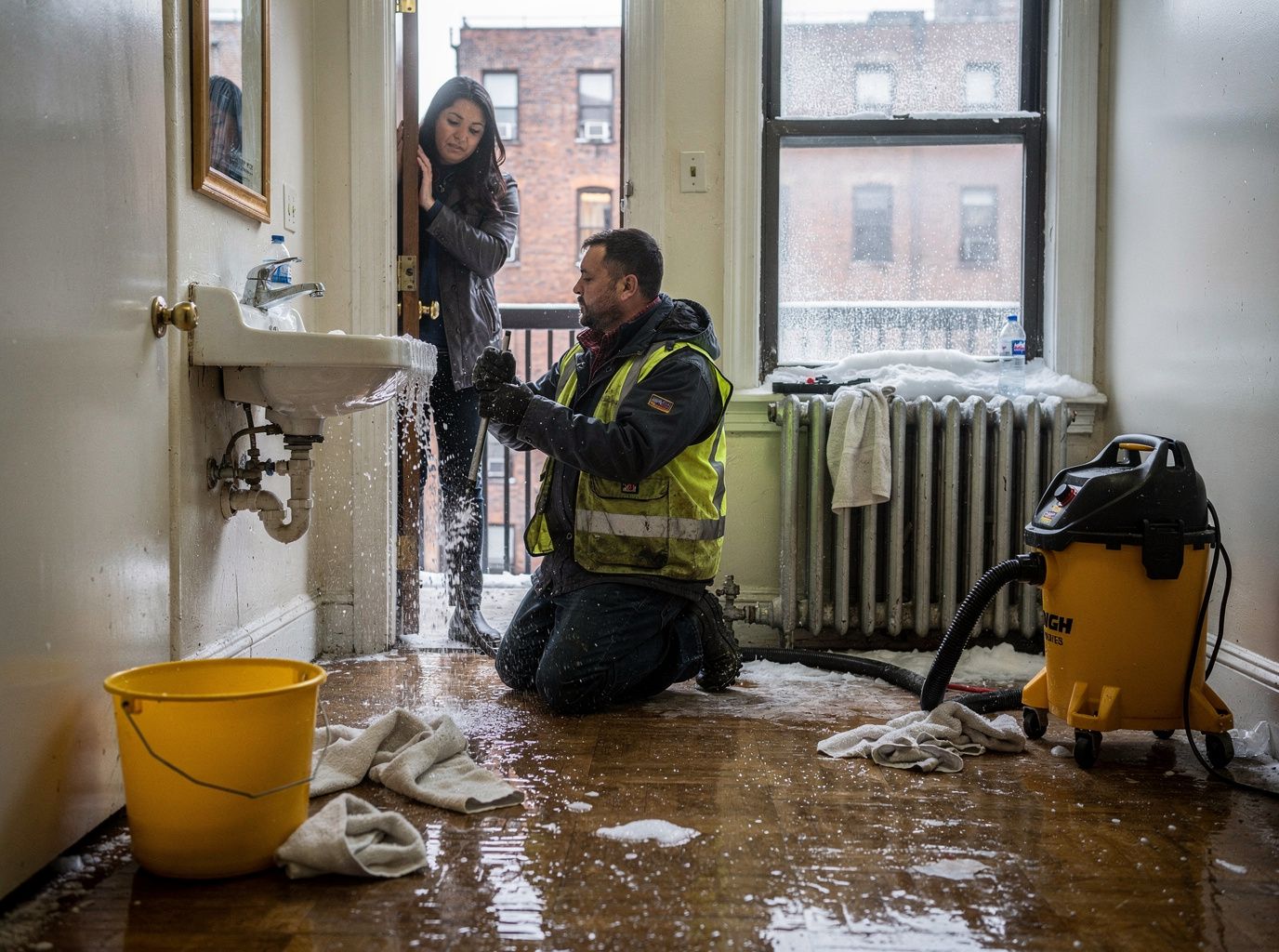
In New York apartments built before 1940, burst pipes after winter freezes require shutting off the main valve within minutes and calling for extraction equipment the same day to stop secondary mold growth driven by cold snaps followed by humidity spikes.
Spotting Freeze Damage in Older Manhattan Stock
Pre-war apartments on the Upper East Side and throughout Manhattan commonly feature cast-iron or galvanized supply lines that contract and split when overnight lows drop below freezing. These buildings sit on the dense grid of New York County, where narrow setbacks and shared walls allow water to travel quickly into neighboring units near Central Park or Times Square. Tenants notice reduced pressure first, followed by ceiling stains or baseboard discoloration within hours. Because summers bring high humidity that slows natural drying, even small leaks from a January freeze can saturate plaster lath before spring arrives. Checking exposed pipes in basements or utility closets after the first hard freeze helps catch hairline cracks before they open fully.
First Actions When a Pipe Bursts
Locate the main shutoff—usually near the front door or in a basement utility room—and turn it clockwise until it stops. Open faucets on lower floors to drain standing water and reduce pressure on the break. Move furniture and rugs away from wet zones, especially in Upper East Side walk-ups where hardwood floors sit directly on joists. Document the affected area with photos that include the Empire State Building view from the window if possible; insurers in New York County often request these records. Avoid using electrical outlets near water until power is isolated. These steps buy time until extraction crews arrive, but they do not replace the need for industrial drying in the humid climate that follows each cold front.
Extraction and Drying Realities in New York County
Professional crews deploy moisture meters and air movers to pull water from subfloors and wall cavities typical in buildings between Brooklyn and the Bronx. In humid subtropical winters, temperatures swing from below freezing to the 40s within days, creating condensation that re-wets surfaces if dehumidifiers are not run continuously. Technicians often remove baseboards and drill small weep holes in drywall to reach trapped moisture near Central Park high-rises. The process usually takes three to five days of monitored drying before reconstruction can begin. Water Damage Restoration teams familiar with these older structures coordinate with building supers to access shared risers without disrupting other residents.
Long-Term Prevention for Local Apartments
Replacing galvanized lines with copper or PEX during renovations reduces future freeze risk in New York County apartments. Insulating pipes in unheated basements and keeping cabinet doors open under sinks during cold snaps allows warmer air to circulate. Building managers in Manhattan also schedule annual inspections before the first freeze forecast. When damage does occur, reviewing What Affects Water Damage Restoration Costs in New York City helps owners understand variables such as floor count and material type. Water Damage Repair specialists can then install shutoff valves at each unit to limit the scope of any future incident.